Crowd Count & Analysis
Crowd Count & Analysis is an Open Vocabulary AI application used to detect and analyze multiple types of objects such as people, smoke, fire, animals, pedestrians, accidents, and other custom objects. This guide walks through opening the Crowd Count & Analysis application in App Stack, configuring devices and ROIs, and setting Meta Parameters for a typical deployment.
1. Finding the Crowd Count & Analysis Application in App Stack
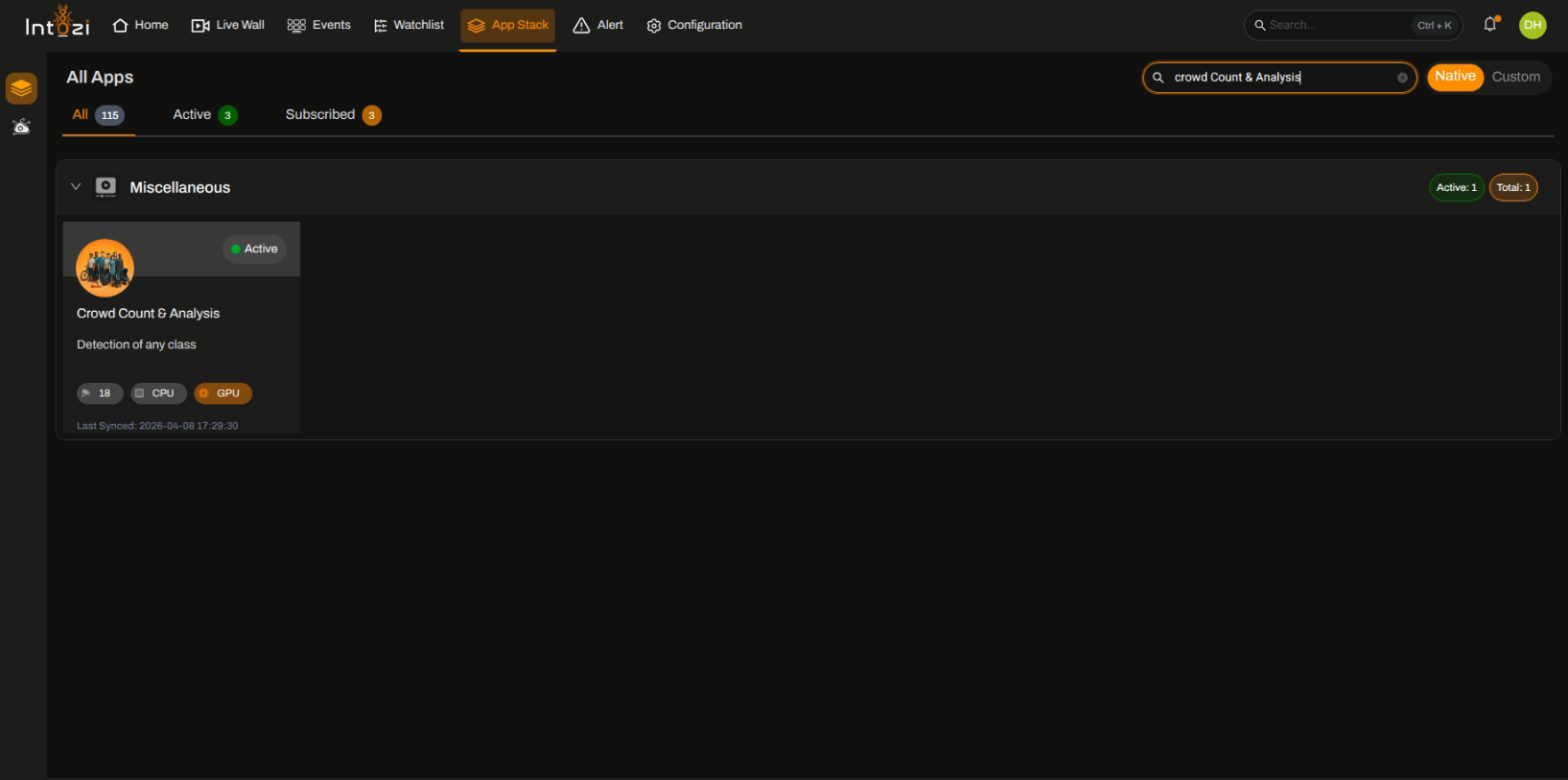
- Open App Stack on the platform.
- Use the search bar (usually at the top right of the dashboard).
- Enter Crowd Count & Analysis.
- In the results, click once on the application to open it.
2. Device Configuration
After the application opens, you are taken to the Device Configuration page.
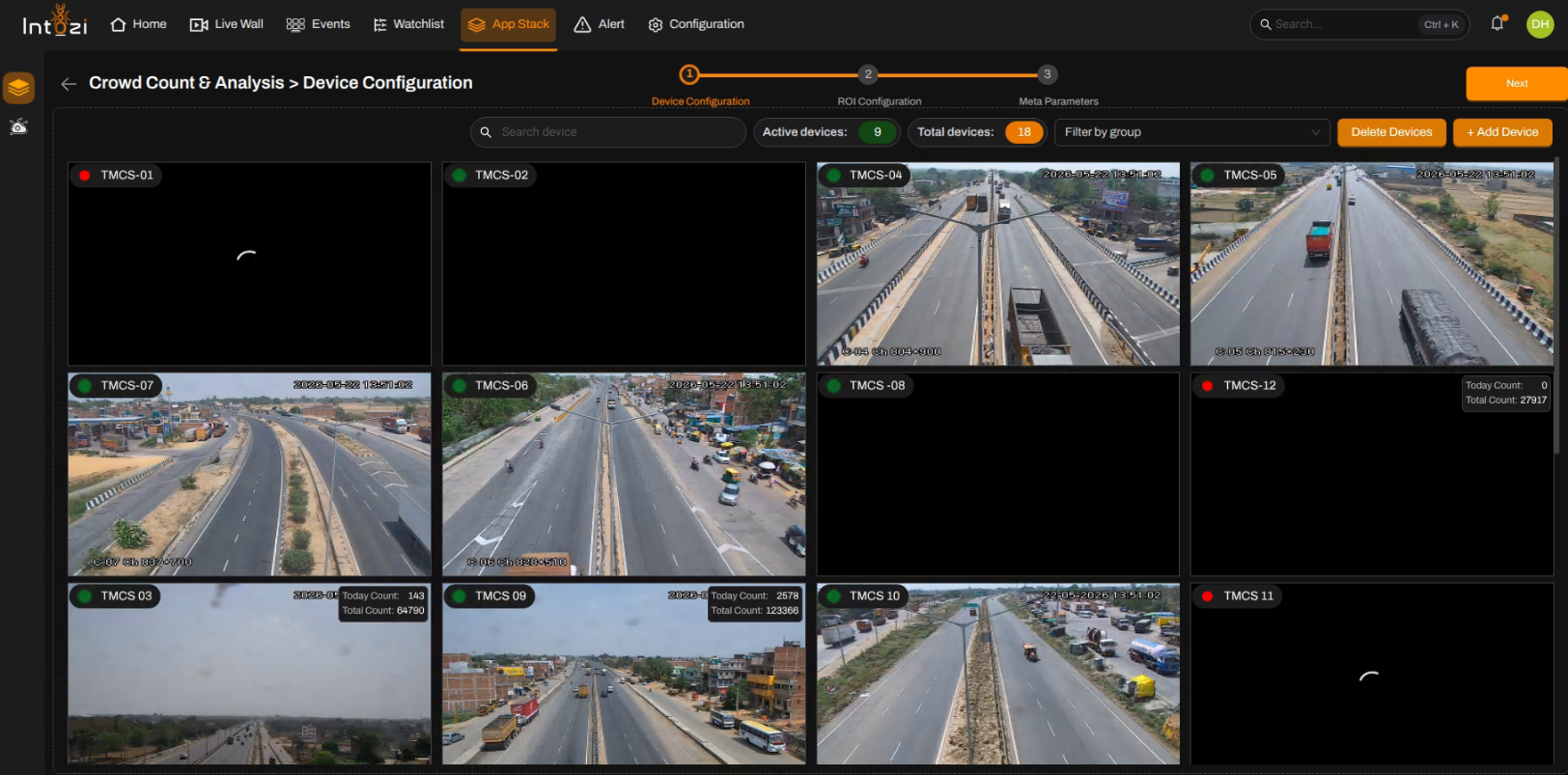
- On the right side of the page, use the option to add devices and connect the cameras you need.
- When finished, continue to the next step (ROI Configuration).
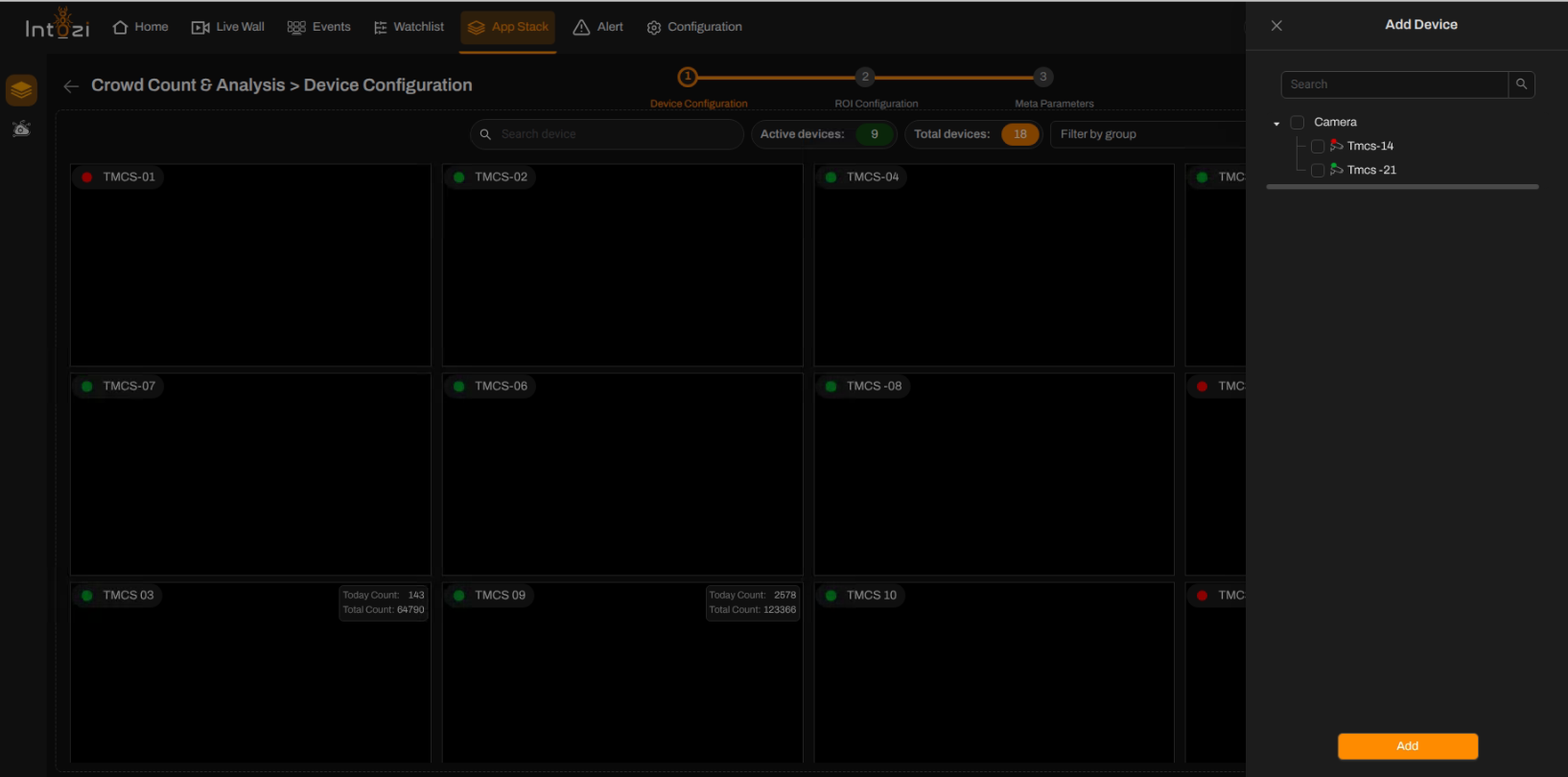
Ensure all required cameras are connected properly before proceeding to ROI configuration.
3. ROI (Region of Interest) Configuration
All devices added during the device configuration step appear here so you can draw ROIs on the correct feeds.
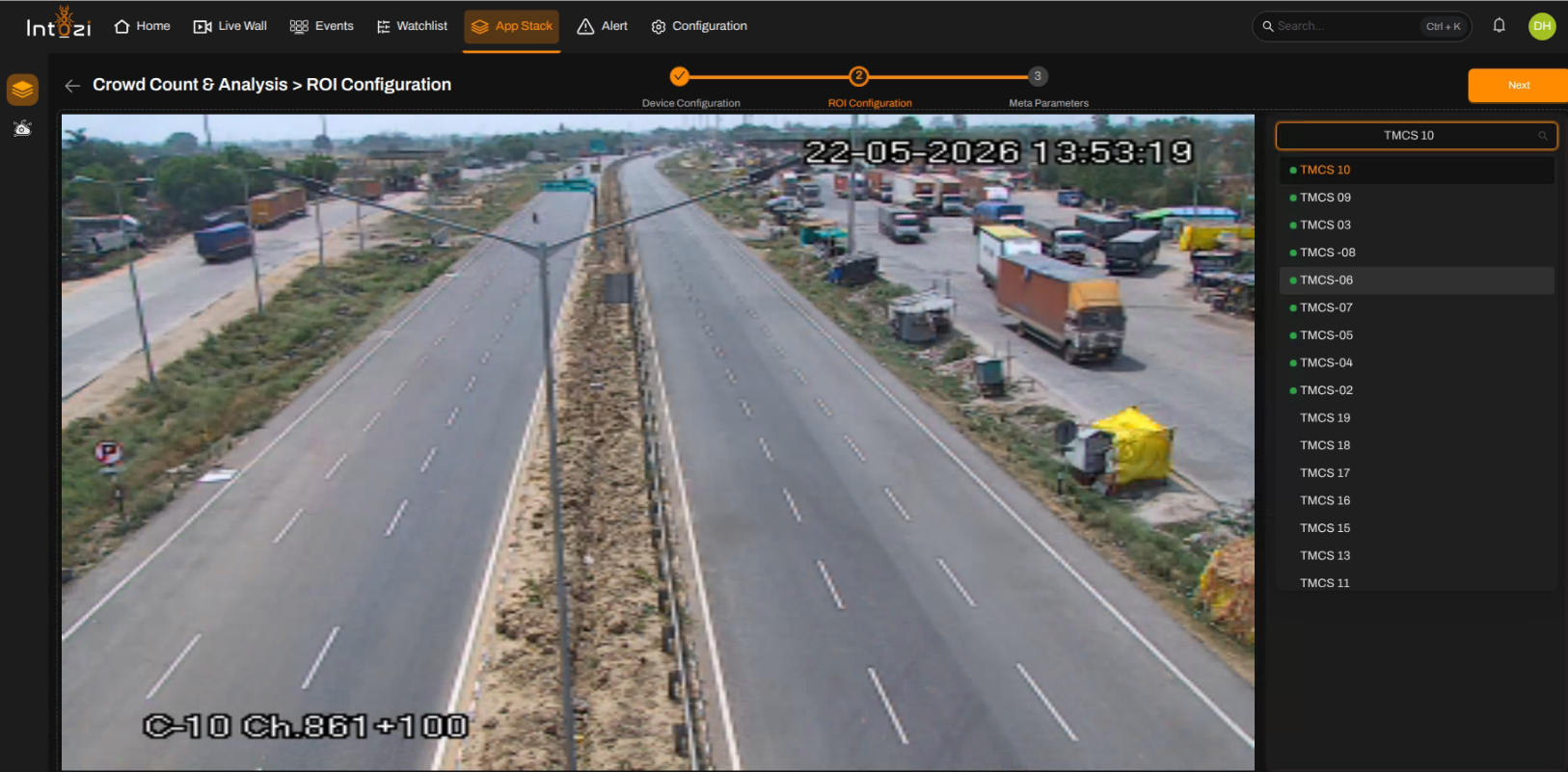
- Select the device you want to configure.
- Click Add ROI (top right of the ROI Configuration page).
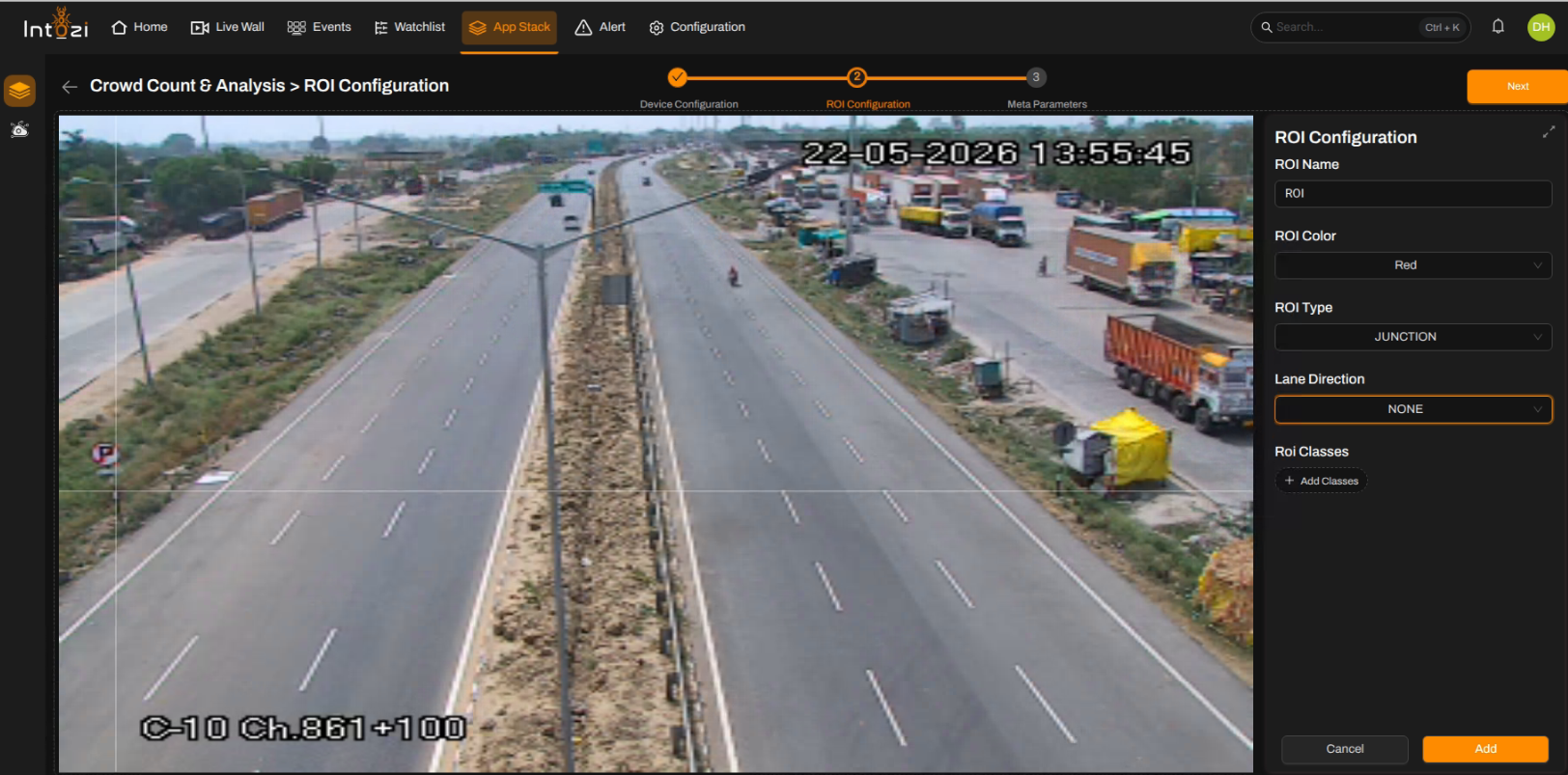
Fill in ROI Details
| Field | Guidance |
|---|---|
| ROI Name | Enter the name of the region of interest (ROI). |
| ROI Color | Choose the color for the ROI. |
| ROI Type | Select Junction as the ROI type. |
| ROI Classes | Not required. |
This application can also run without configuring an ROI.
4. Meta Parameters Configuration
After ROI setup, open the Meta Parameters page.
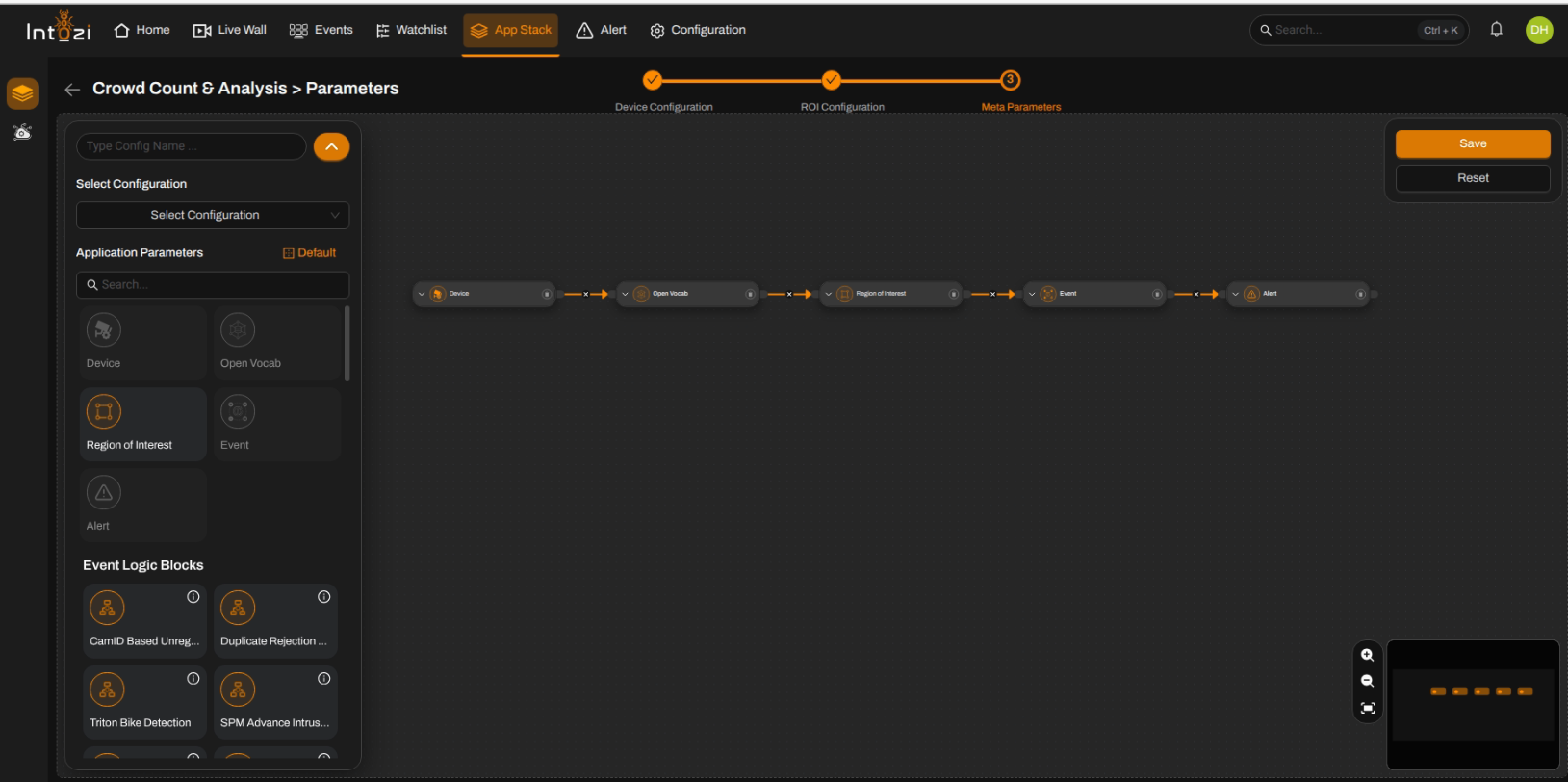
4.1 Default vs. Custom Configuration
You can either:
- Use a default configuration, or
- Create a new custom configuration.
A default configuration typically includes the following modules:
- Device
- Open Vocab
- Region of Interest (ROI)
- Event
- Alert
5. Device Module Settings
Select the required device and configure the following settings.
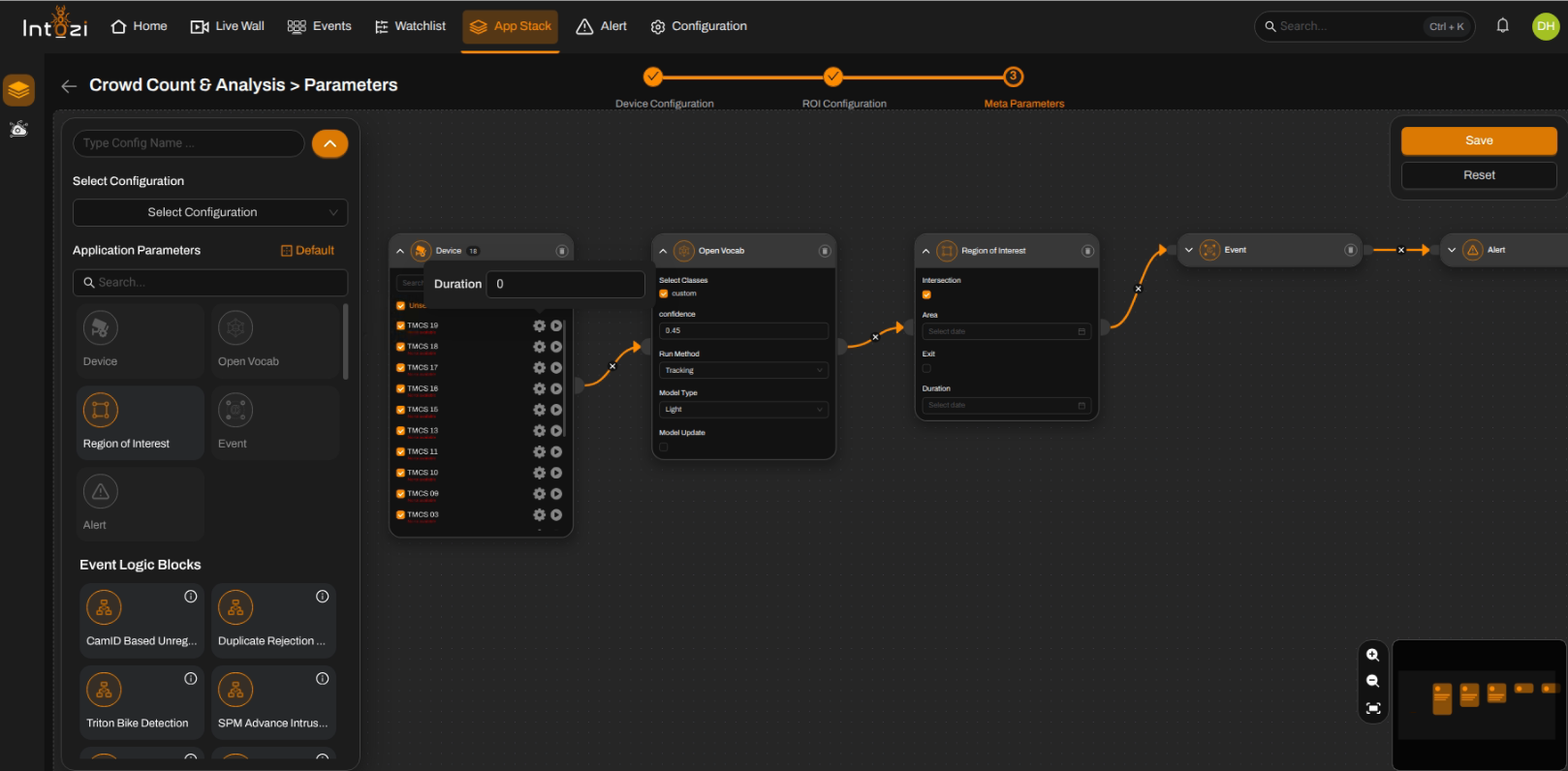
Available Settings
Duration
- Duration is configured in seconds.
- Defines the time interval after which the same camera generates the next event.
5.1 Open Vocab Confidence
- Default value: 0.45
- Can be adjusted according to deployment scenarios and camera conditions.
6. Final Configuration
- Select all required devices.
- Configure the required device parameters.
- Select the corresponding ROIs.
- Enter a configuration name.
- Select the hardware type (CPU or GPU).
- Configure batch size if required.
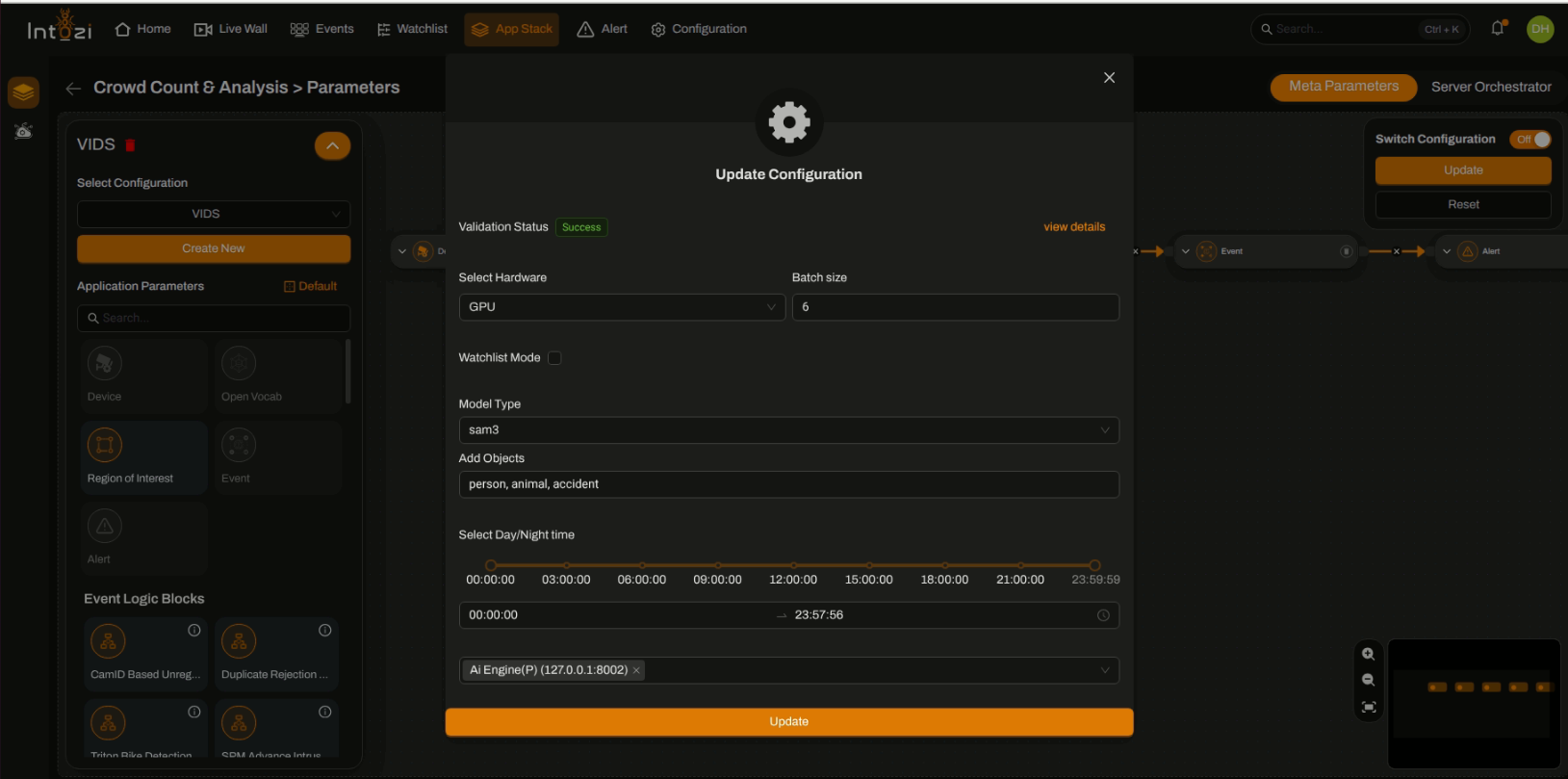
If the number of connected cameras is large, configure batch size as per Operations or CV team recommendations.
7. Model Type
The application supports multiple model types depending on the deployment scenario and hardware resources.
Detic
- Used in resource-constrained environments.
- Recommended when fewer than 100 people need to be detected.
CountGD
- Used when crowd density is high.
- Recommended when sufficient GPU resources are available.
SAM3
- Used for detecting custom objects.
Common Use Cases
- Smoke & Fire
- Pedestrian detection
- Accident detection
- Other custom objects
SAM3 requires at least 3 GB VRAM.
Intozi_VLM
- Currently not in use.
8. Add Objects
Add the objects that need to be detected using this application.
Examples
- Person
- Smoke
- Fire
- Animal
- Pedestrian
- Accident
- Any custom object
9. Analytic Server Selection
Select the required Analytic Server for deployment.
When everything is configured, click Save.
Conclusion
The Crowd Count & Analysis application helps automate crowd monitoring and open vocabulary object detection using configurable ROI settings, model selection, and hardware acceleration options.
By properly configuring devices, ROIs, model types, and object categories, users can achieve accurate and efficient crowd analysis and custom object detection for real-time monitoring applications.