Loitering Detection
Loitering Detection is used to identify individuals who remain within a defined area for a specified duration. When a person stays inside the configured ROI longer than the defined threshold, a Loitering Event is generated.
This guide explains how to configure the Loitering Detection application in App Stack.
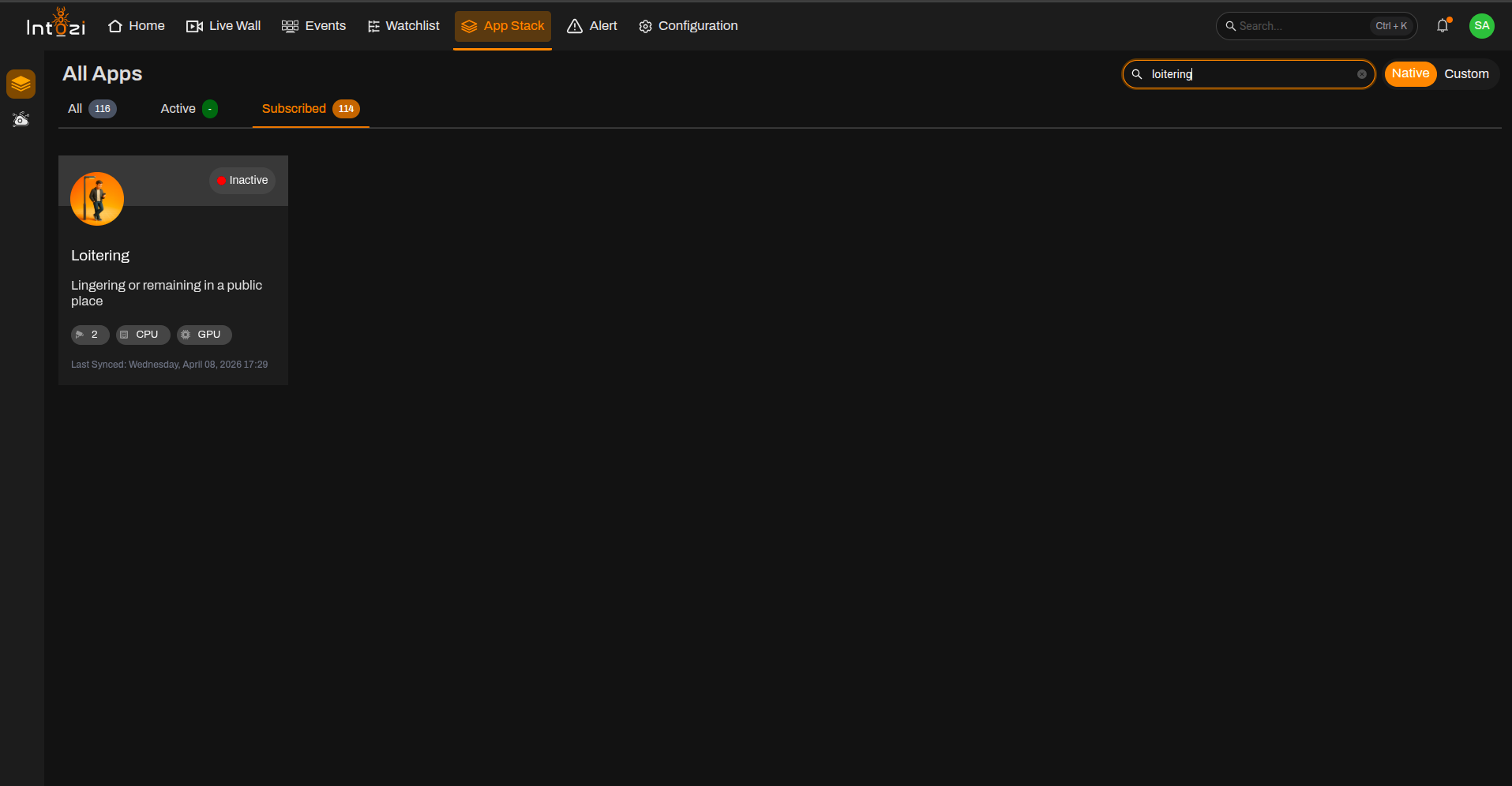
1. Finding the Loitering Application in App Stack
- Open App Stack on the platform.
- Use the search bar (usually at the top right of the dashboard).
- Enter Loitering.
- In the results, click once on the application to open it.
2. Device Configuration
After the application opens, you will be directed to the Device Configuration page.
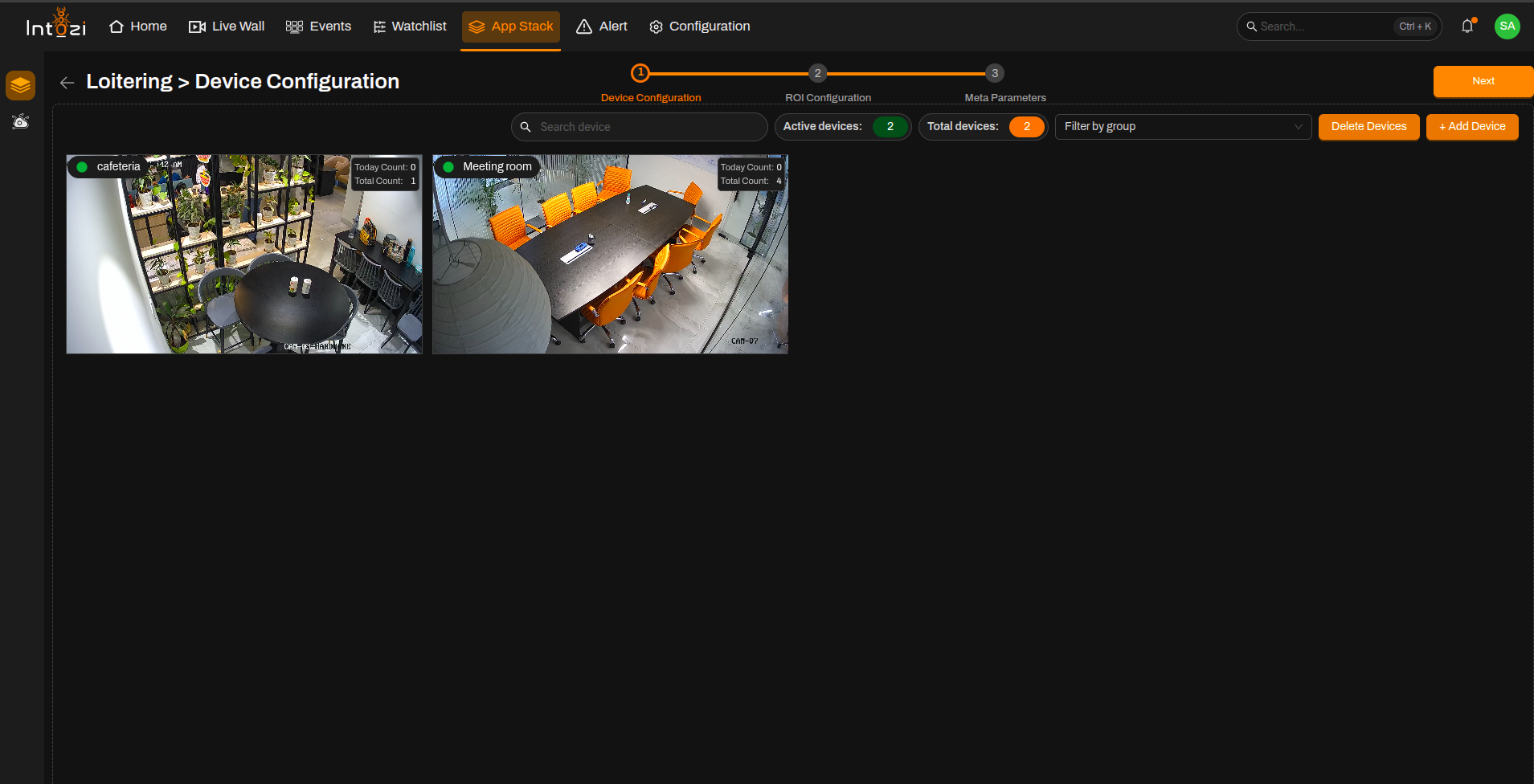
- On the right side of the page, click Add Device to add the required camera(s).
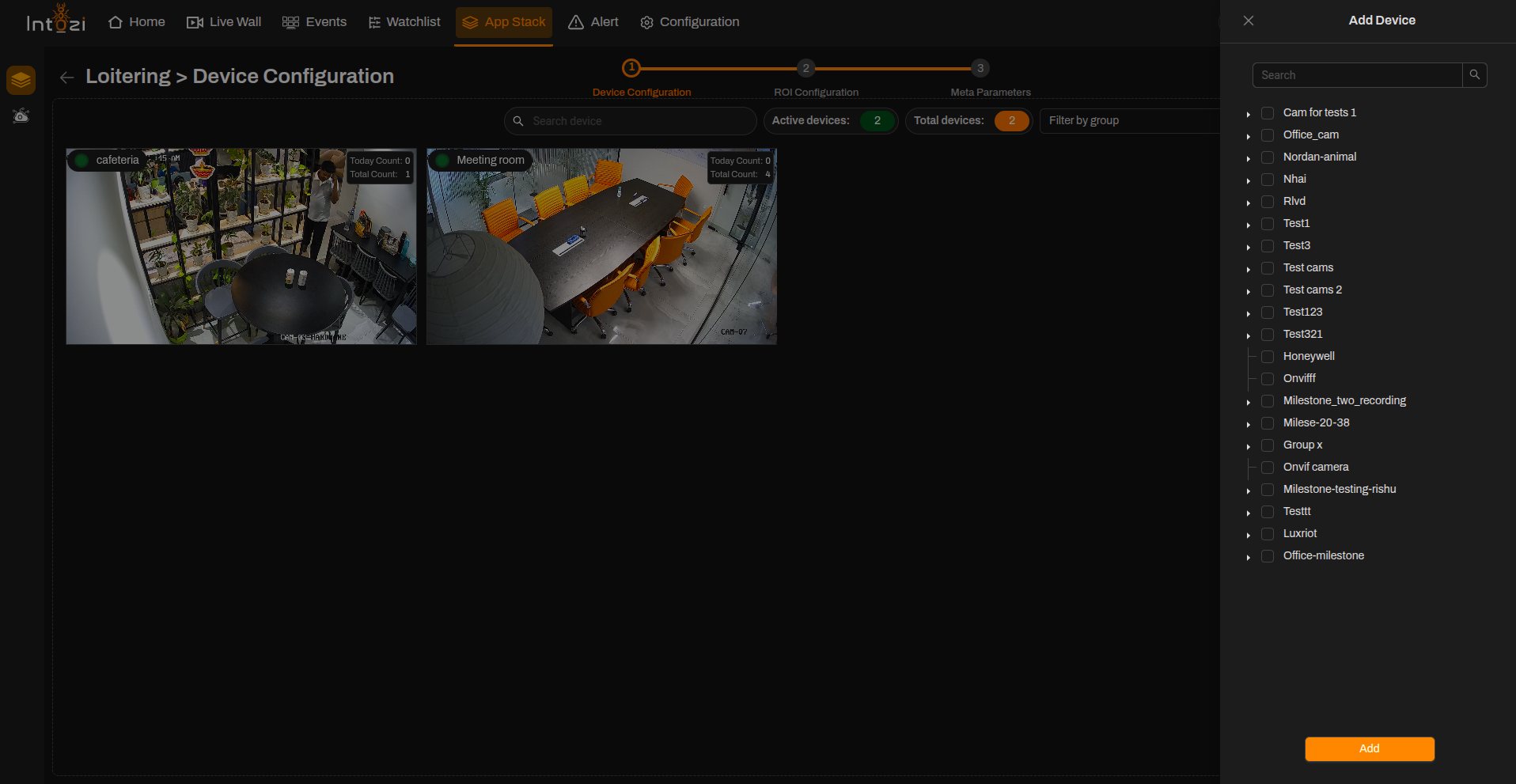
- Once the devices are added, proceed to the ROI Configuration page.
Ensure all required cameras are added before proceeding to ROI configuration.
3. ROI (Region of Interest) Configuration
All added devices will be displayed on this page for ROI configuration.
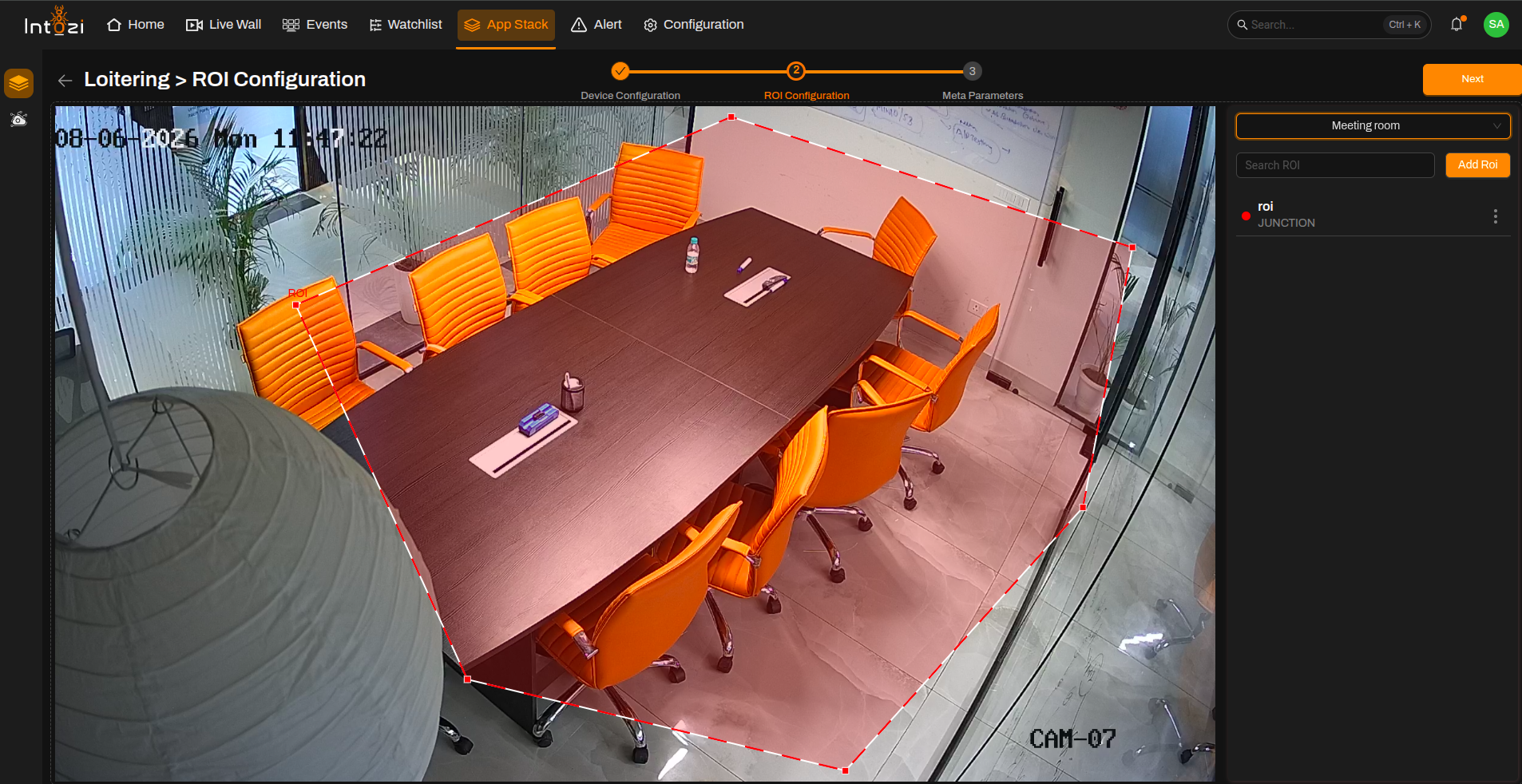
- Select the desired device.
- Click Add ROI (top right of the page).
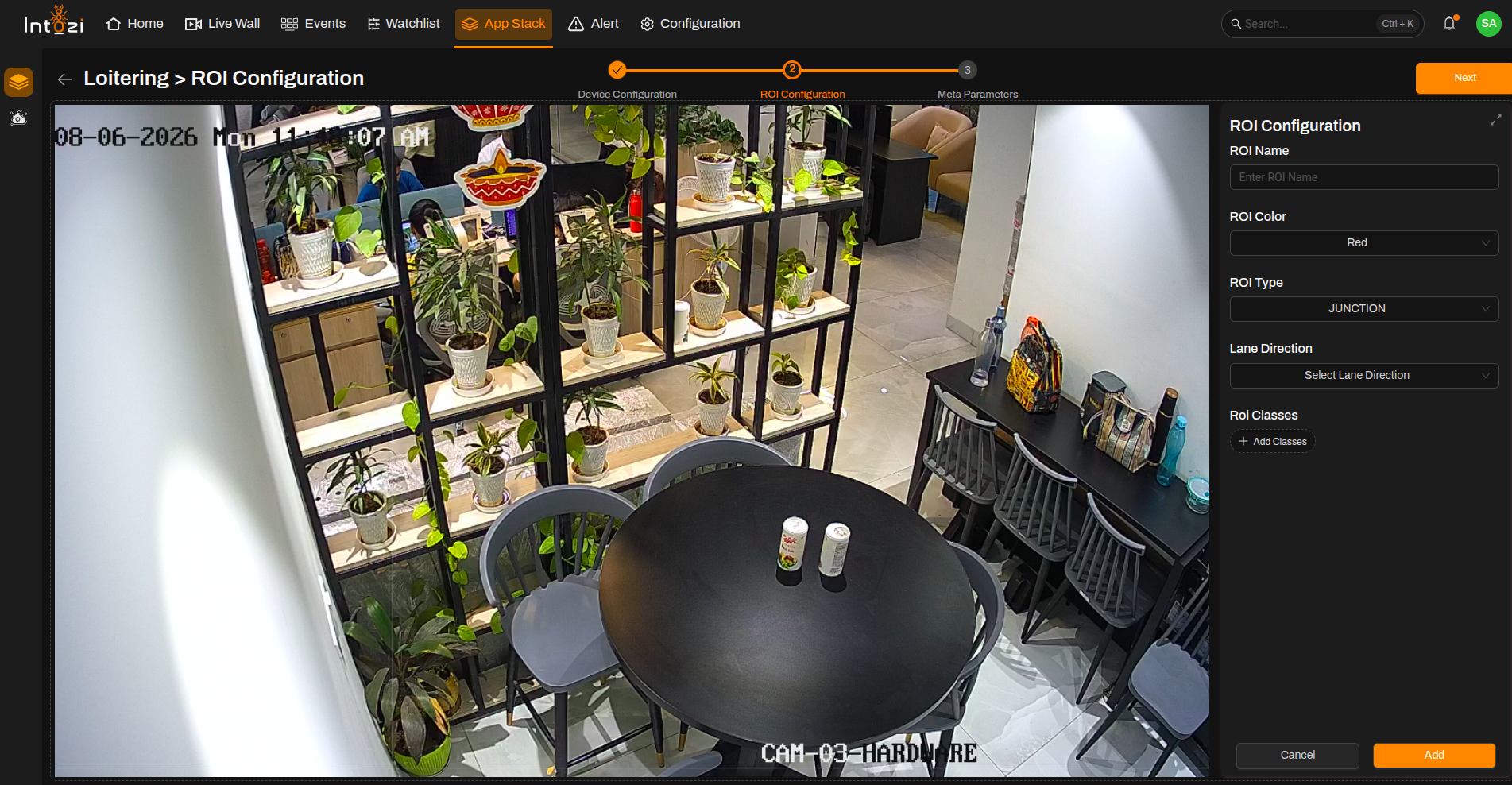
Fill in ROI Details
| Field | Guidance for Loitering |
|---|---|
| ROI Name | Enter a meaningful name for the ROI. |
| ROI Color | Select a color for visualization. |
| ROI Type | Select Junction. |
| Lane Direction | Set to None. |
| ROI Classes | Not required. |
You can update or delete any ROI by selecting it and using the available options.
4. Meta Parameters Configuration
After ROI setup, navigate to the Meta Parameters page.
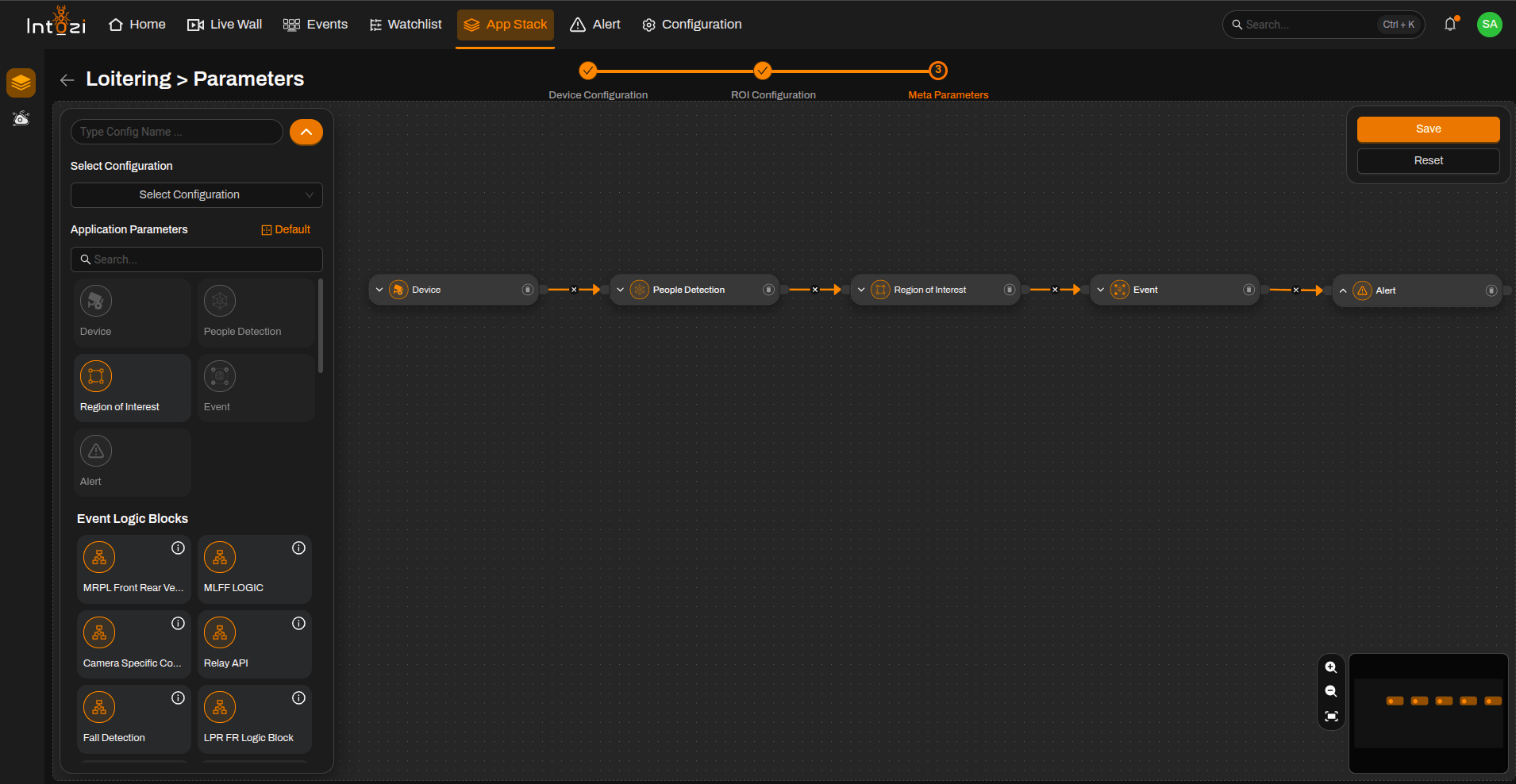
4.1 Default vs Custom Configuration
You can either:
- Use a default configuration, or
- Create a custom configuration.
Default Configuration Nodes
- Device
- People Detection
- Region of Interest (ROI)
- Event
- Alert
5. Device Node Settings
Select the required device and configure the following settings.
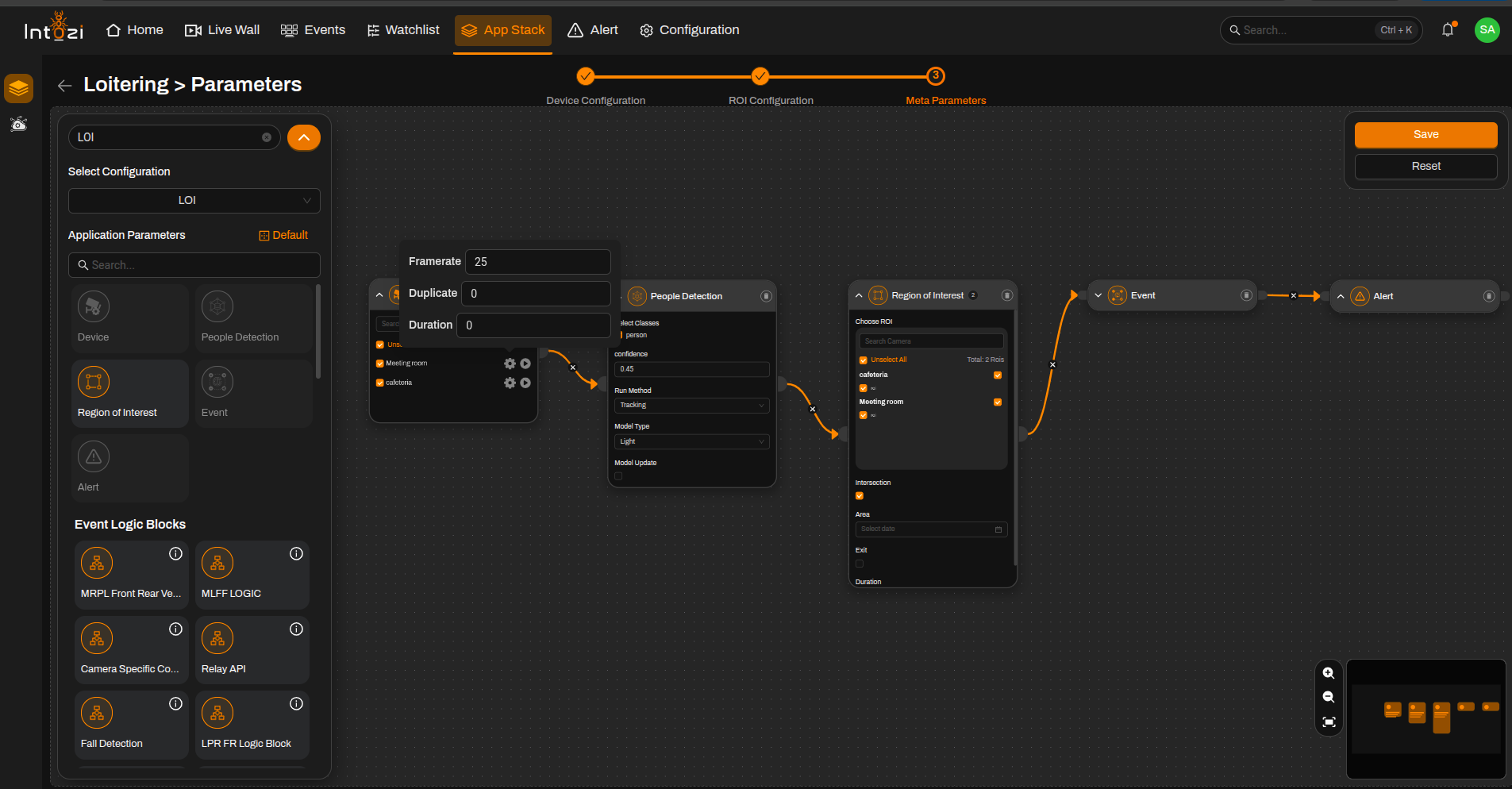
Frame Rate
- Defines the frame rate at which the camera stream is processed.
- Configure the value according to the camera's operating frame rate.
Duplication
| Value | Description |
|---|---|
| 0 | No duplicate events |
| 1 | Generate duplicate events |
Duration
- Defines the amount of time (in seconds) a person must remain inside the ROI before being considered as loitering.
- Once the configured duration is exceeded, a loitering event is generated.
The Duration parameter is the primary setting used to determine when a loitering event should be generated.
6. People Detection Node Settings
Confidence Threshold
- Default value: 0.45
- Can be adjusted based on:
- Camera angle
- Lighting conditions
- Scene complexity
- Deployment requirements
Increase the confidence threshold to reduce false detections, or decrease it if valid detections are being missed.
7. Final Configuration
After selecting the required device and ROI:
- Configure the required parameters.
- Enter a Configuration Name.
- Select the hardware type:
- CPU
- GPU
- Configure the Batch Size if required.
- Select the required Analytic Server for deployment.
Additional Recommendations
- Use GPU deployment for better performance when processing multiple camera streams.
- Configure batch size based on recommendations from the Development/CV Team.
- Verify ROI placement before saving the configuration.
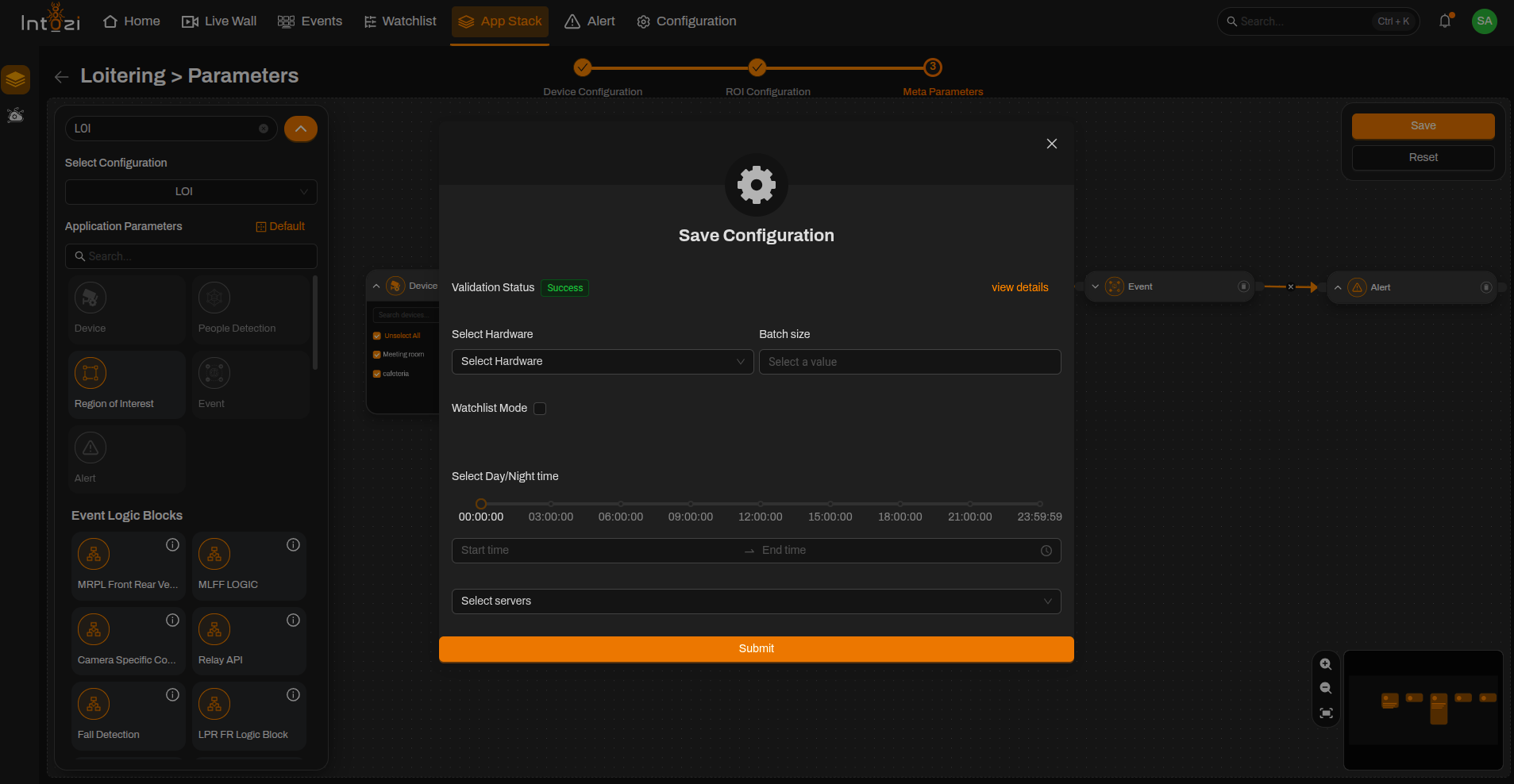
8. Saving the Configuration
After verifying all settings:
- Confirm device selection.
- Verify ROI placement.
- Review Duration settings.
- Review confidence threshold values.
- Confirm hardware selection.
- Verify Analytic Server selection.
Click Save to activate the configuration.
Conclusion
The Loitering Detection application helps identify individuals who remain within a specified area for longer than an allowed duration. Proper ROI placement and duration configuration ensure accurate event generation while minimizing false alerts.
By correctly configuring device settings, ROI regions, loitering duration, and detection thresholds, users can effectively monitor restricted or sensitive areas and receive timely loitering alerts.