Unattended Object Detection
Unattended Object Detection is used to detect objects that have been left unattended within a defined area for a specified duration.
This guide explains how to configure the Unattended Object Detection application in App Stack.
1. Finding the Unattended Object Application in App Stack
- Open App Stack on the platform.
- Use the search bar (usually at the top right of the dashboard).
- Enter Unattended Object.
- In the results, click once on the application to open it.
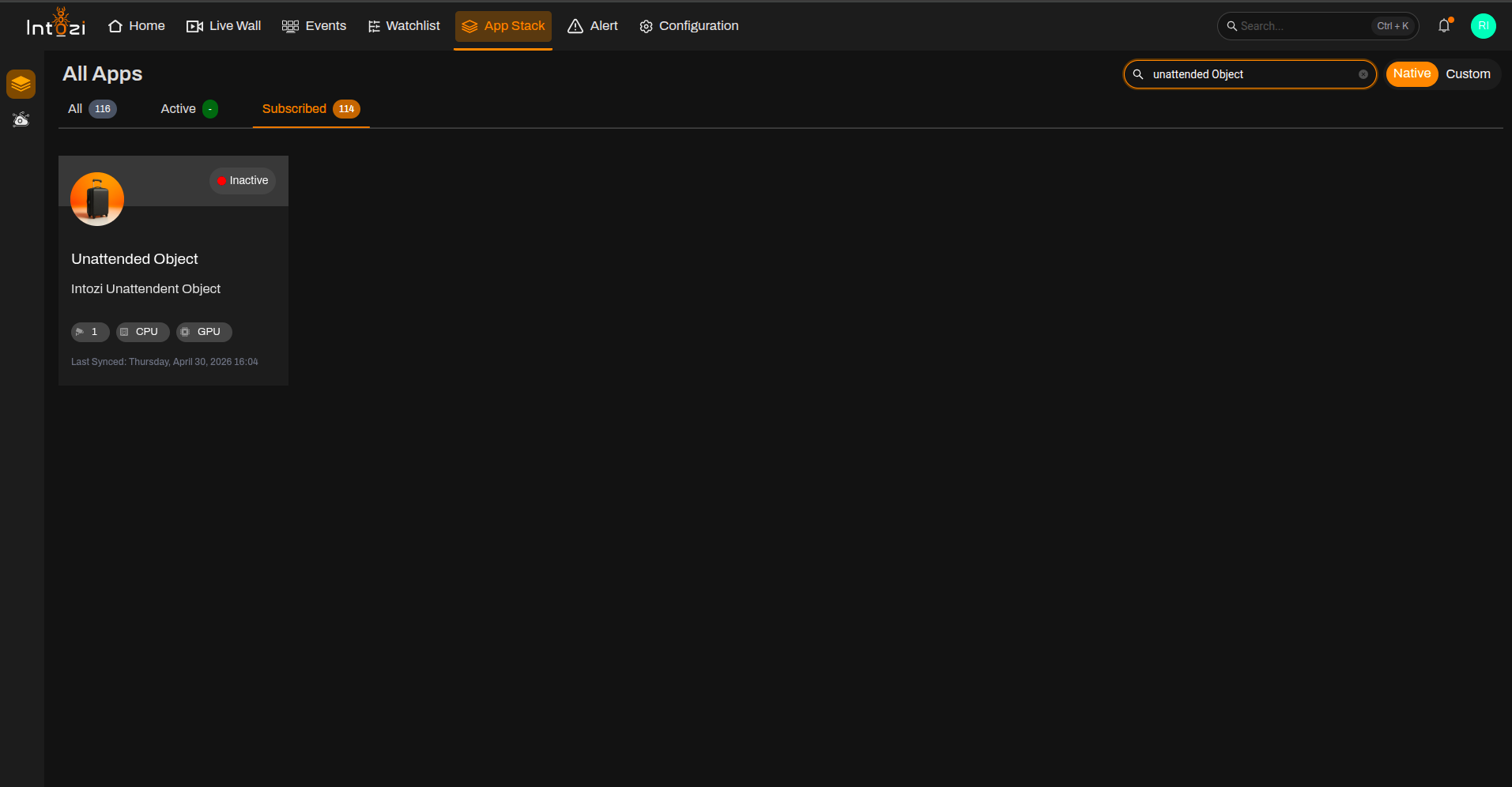
2. Device Configuration
After the application opens, you will be directed to the Device Configuration page.
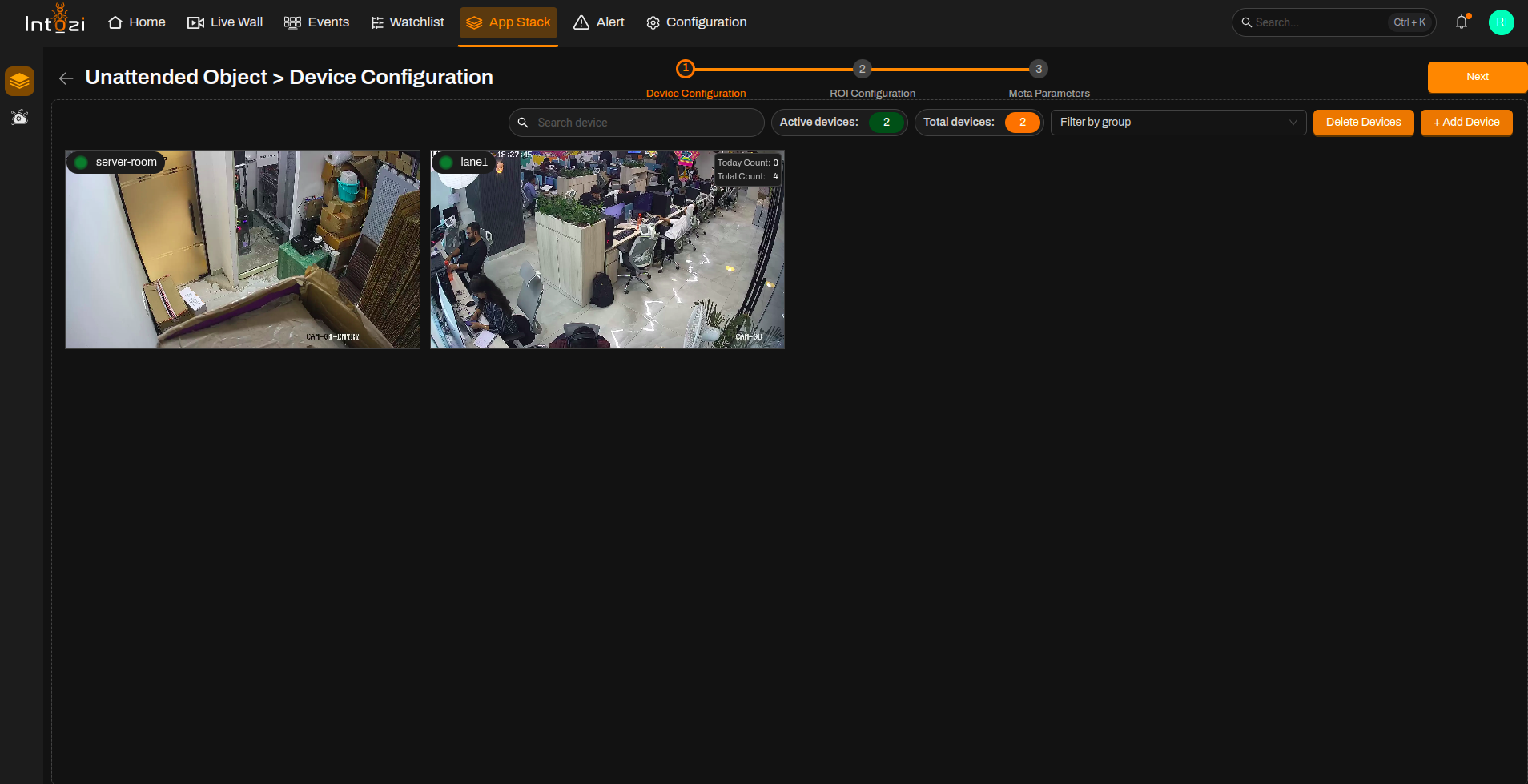
- On the right side of the page, click Add Device to add the required camera(s).
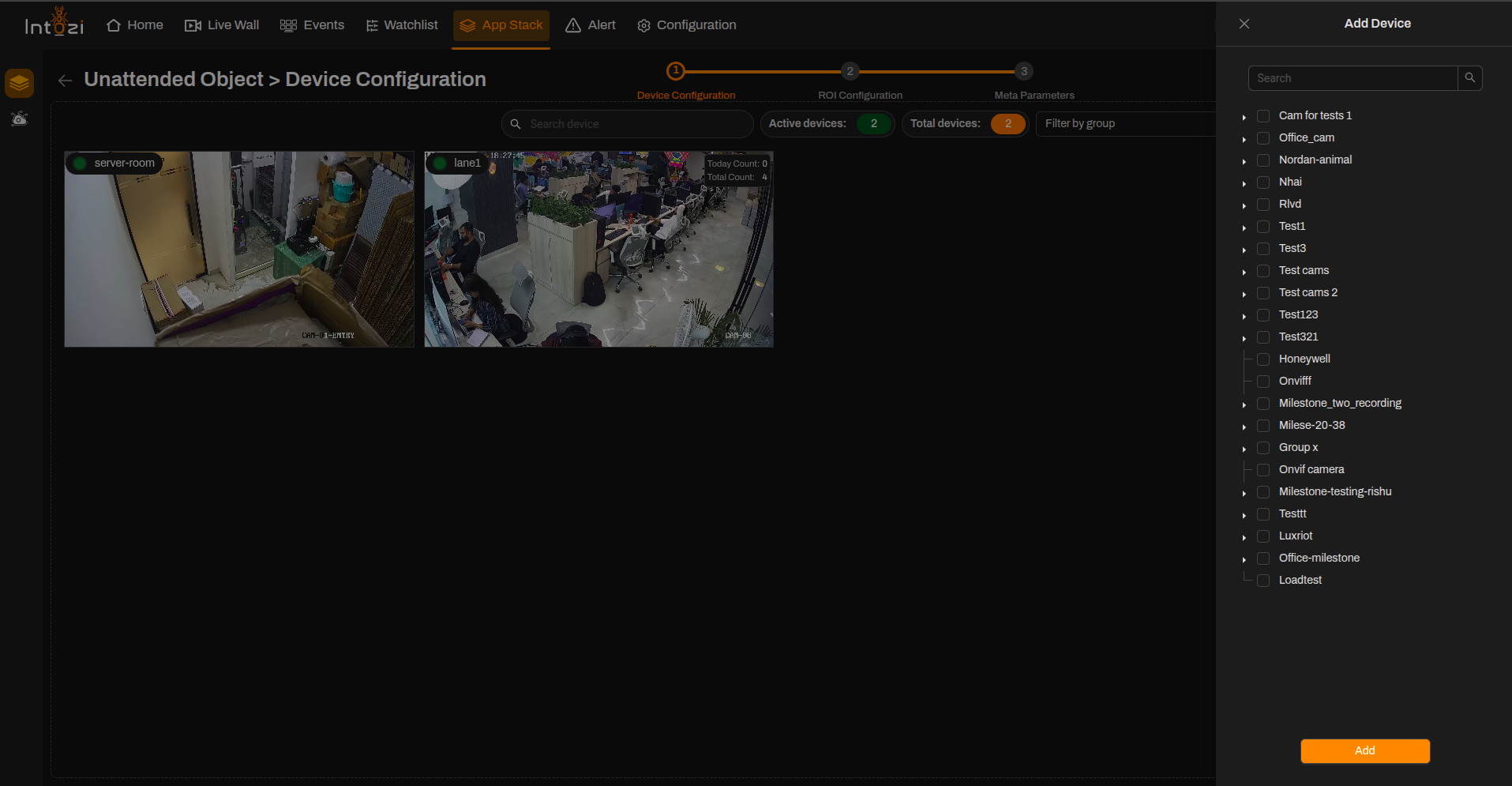
- Configure the required device settings.
- Once the devices are added, proceed to the ROI Configuration page.
Ensure all required cameras are added before proceeding to ROI configuration.
3. ROI (Region of Interest) Configuration
All added devices will be displayed on this page for ROI configuration.
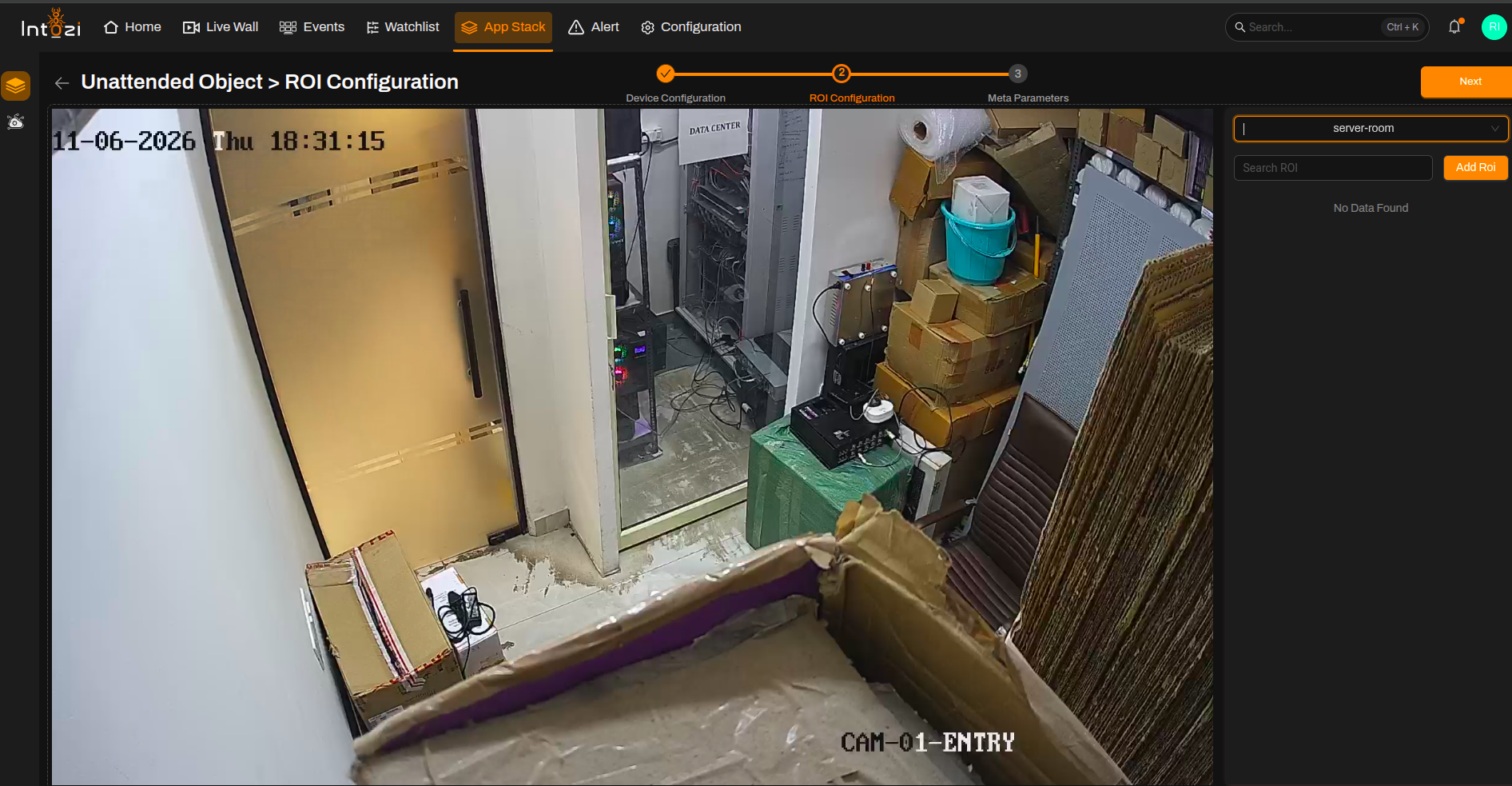
- Select the desired device.
- Click Add ROI (top right of the page).
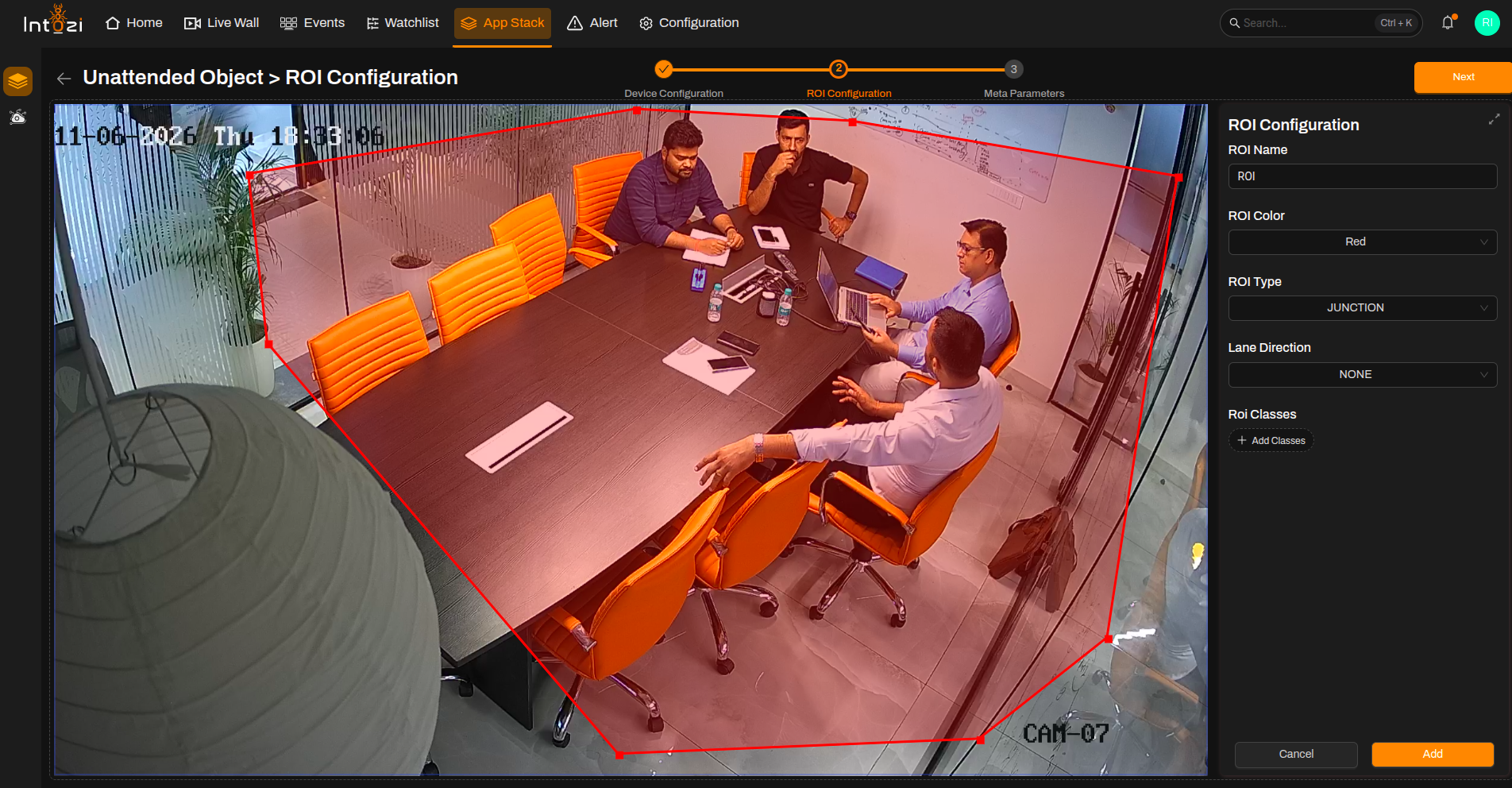
Fill in ROI Details
| Field | Guidance for Unattended Object Detection |
|---|---|
| ROI Name | Enter a meaningful name for the ROI. |
| ROI Color | Select a color for visualization. |
| ROI Type | Select Junction. |
| Lane Direction | Set to None. |
| ROI Classes | Not required. |
You can update or delete any ROI by selecting it and using the available options.
4. Meta Parameters Configuration
After ROI setup, navigate to the Meta Parameters page.
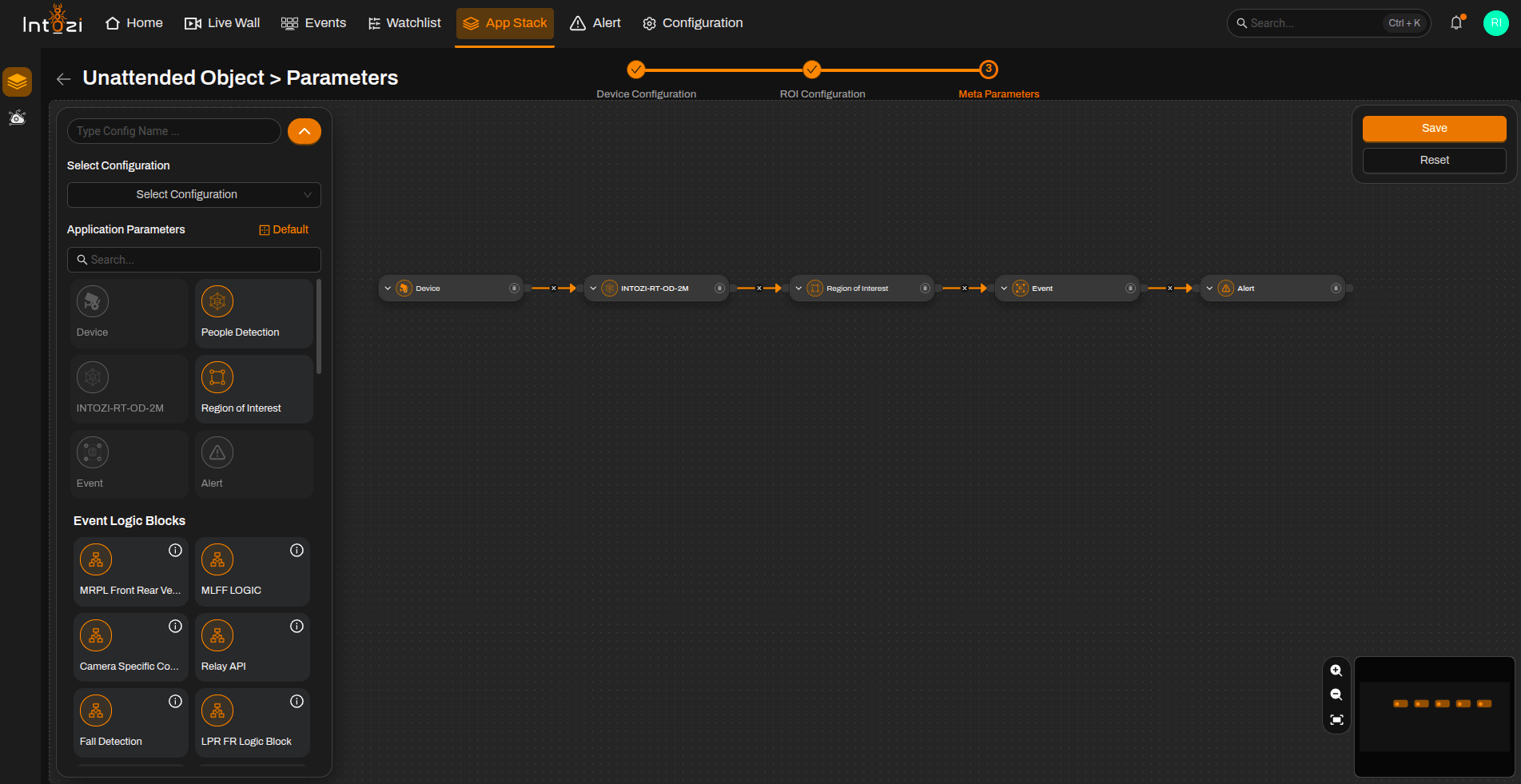
4.1 Default vs Custom Configuration
You can either:
- Use a default configuration, or
- Create a custom configuration.
Default Configuration Nodes
- Device
- INTOZI-RT-OD-2M
- Region of Interest (ROI)
- Event
- Alert
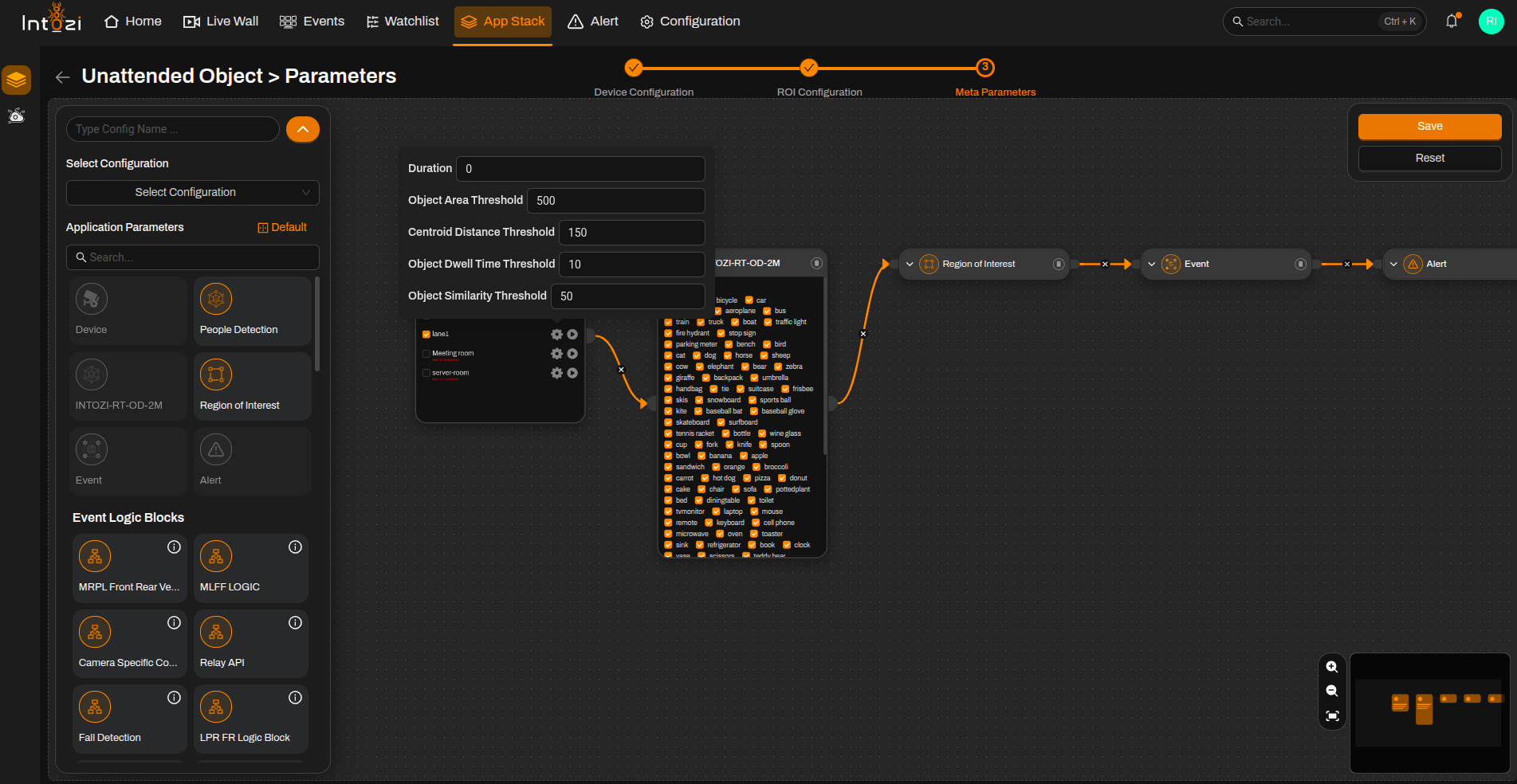
5. Device Node Settings
Select the required device and configure the following settings.
Duration
- Defines the time interval (in seconds) after which a new event can be generated.
- Do not set this value to 0, otherwise only a single event may be generated.
Object Area Threshold
- Defines the minimum object area required for detection.
- Recommended value: 500 (default).
Centroid Distance Threshold
- Used to determine the movement distance of an object.
- Recommended value: 150 (default).
Object Dwell Time Threshold
- Defines the amount of time an object must remain stationary before being considered unattended.
- Primarily used when FastSAM is selected as the unattended detection method.
Object Similarity Threshold
- Used to compare detected objects across frames.
- Recommended value: 50 (default).
The recommended default values are suitable for most deployment scenarios and should only be modified when required.
6. INTOZI-RT-OD-2M Node Settings
Confidence Threshold
- Default value: 0.45
- Can be adjusted according to:
- Camera angle
- Lighting conditions
- Deployment environment
Object Classes
Select only the following classes:
- Backpack
- Handbag
- Suitcase
All other classes should remain unchecked.
For optimal unattended object detection, only Backpack, Handbag, and Suitcase classes should be enabled.
7. Final Configuration
After selecting the required device and associated ROI:
- Enter a Configuration Name.
- Select the hardware type:
- CPU
- GPU (Recommended)
- Configure the Batch Size as recommended by the Development/CV Team.
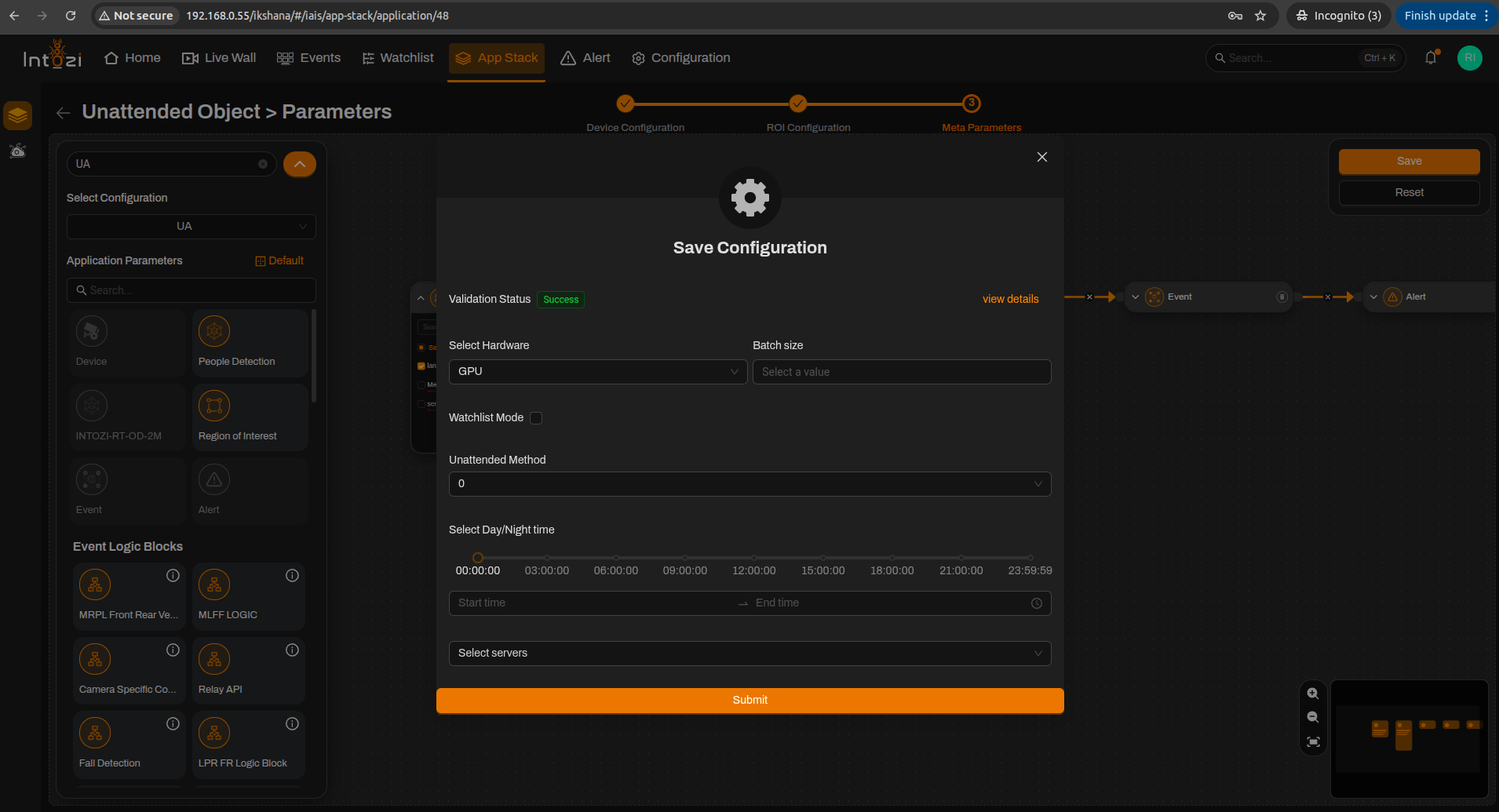
Unattended Detection Method
0 – FastSAM Method
- Uses FastSAM for unattended object detection.
- Compares the current frame with previous frames to identify unattended objects.
1 – YOLO Method
- Uses YOLO-based object detection.
- Detects unattended objects based on the interaction between person bounding boxes and object bounding boxes.
Always use 1 (YOLO Method) for unattended object detection deployments.
Analytics Server Selection
- Select the required Analytic Server for deployment.
8. Saving the Configuration
After verifying all settings:
- Confirm device selection.
- Verify ROI placement.
- Review Duration settings.
- Verify Object Area Threshold values.
- Verify Centroid Distance Threshold values.
- Review Object Dwell Time Threshold settings.
- Verify Object Similarity Threshold values.
- Confirm selected object classes.
- Verify Analytics Server selection.
- Confirm hardware and batch size configuration.
Click Save to activate the configuration.
Conclusion
The Unattended Object Detection application helps identify objects that have been left unattended within monitored areas. It is particularly useful for security-sensitive environments such as airports, railway stations, public facilities, and commercial buildings.
By properly configuring ROI placement, object thresholds, detection classes, and using the recommended YOLO detection method, users can achieve reliable unattended object detection and timely event generation.